
Most Clutter Isn’t a Mess. It’s Postponed Decisions.
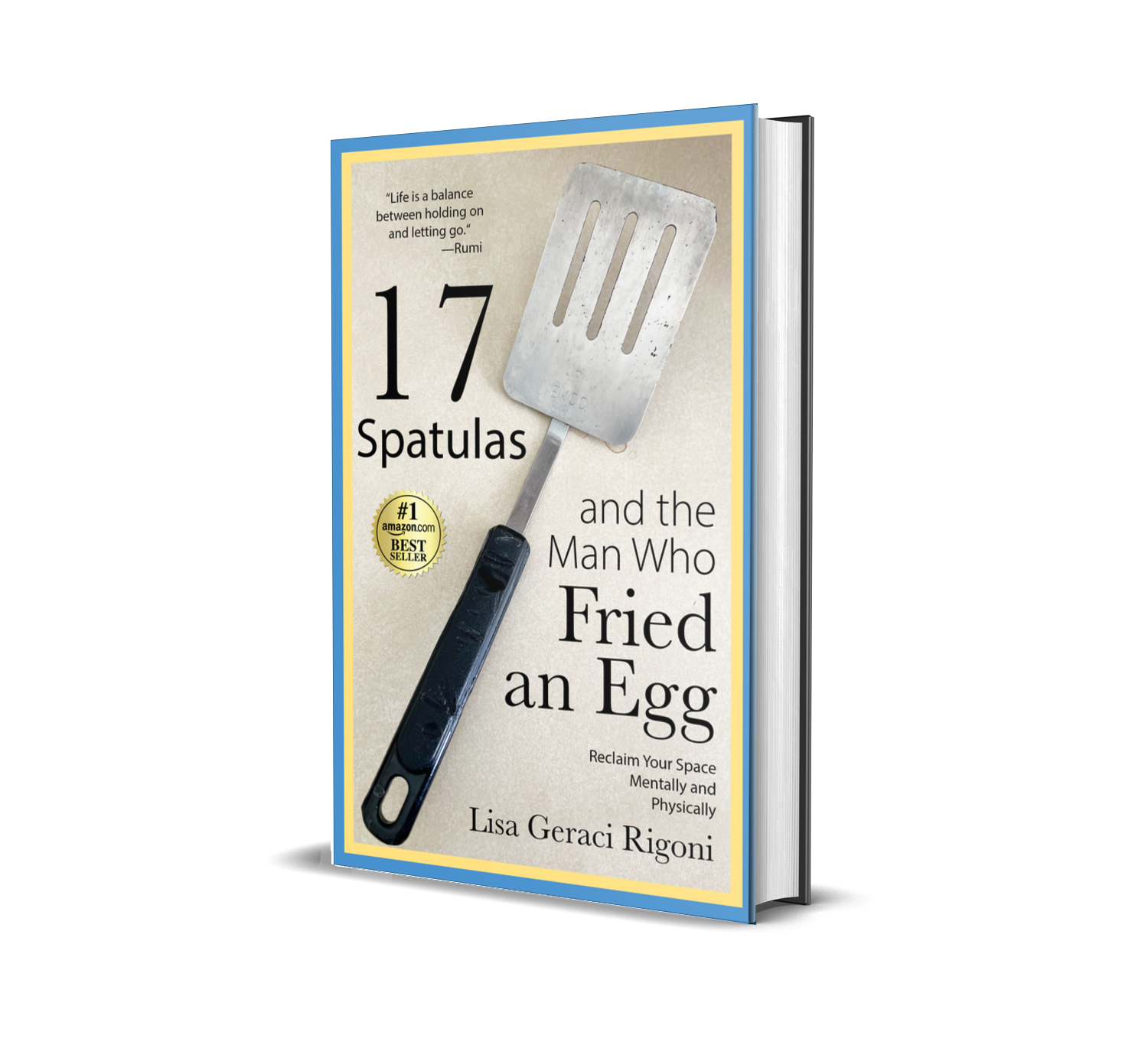
By Our Special Guest Writer - Lisa Geraci Rigoni
People think clutter is dis-order.
Too much stuff.
Too little space.
Not enough discipline.
That’s not what I see.
That I see is time.
When I walk into someone’s home, they usually apologize first.
They apologize for the closet they don’t open.
The room they shut the door on.
The drawer they haven’t touched in years.
They assume something is wrong with them.
Most of the time, it’s just that life happened to them.
Things used to be put away carefully.
Things were kept for a reason.
It all made sense once.
And life kept going.
Very few people decide to surround themselves with excess.
What they decide instead to do is wait.
Not today.
Not now.
Wait until things slow down a bit.
I’ll get to it. Some Day
Those decisions seem harmless.
But a decision to not change something, is still a decision.
It settles in.
It takes root.
Over time, those postponed decisions pile up. Quietly. Without notice. Until one day they look like clutter.
Not because someone failed.
But because no one ever returned to make the change.
Longer lives make ‘stuff’ harder to see.
A drawer meant for one chapter stays for twenty years.
A home built for a family is tasked to hold many stages of lives.
An old role ends, but the evidence of it stays behind.
Life moves faster than our surroundings.
And because nothing forces us to pause, we rarely do.
People think clutter is physical.
It is and it isn’t.
It can also hold mental space.
Some ‘stuff’ carry weight.
Not just the object itself.
The ‘stinkin-thinkin’ attached to it.
Questions left unanswered.
A story unfinished.
A version of yourself that never quite came to fruition.
Over time, that weight becomes a burden.
Not always loud.
Not always dramatic.
Quiet. Constant. Deep.
The kind you feel when a transition comes and everything feels heavier than it should.
The kind that makes people tired in their own homes.
That’s why clutter can get emotional.
It’s unanswered questions made visible.
Many things stay because they stand in for something else.
Who we were.
Who we thought we would be.
A life we imagined but never quite lived.
Long lives stretch identity.
Without stopping, old versions of ourselves don’t leave when new ones arrive. They linger.
Letting go isn’t about getting organized.
It’s about accepting things have changed.
Accumulation is easy.
Adding doesn’t ask much.
Keeping asks even less.
Subtraction is harder.
It asks us to choose.
To notice time passing.
To accept that a chapter has ended.
Avoiding that choice feels kinder in the moment.
But over long lives, avoidance adds up.
What we don’t decide stays.
The people who struggle most with clutter aren’t careless.
They’re thoughtful.
They’re capable.
They’re used to carrying responsibility.
They just haven’t asked themselves one simple question often enough:
What in my life expired quietly while I wasn’t paying attention?
If clutter is postponed decisions, then the issue isn’t how much we own.
It’s how rarely we ask ourselves Who, what, where, when and Why.
How gave it to me? What is it? Where did I get it? When did I get it? Why do I still have it?
They require returning.
Revisiting.
Letting some things end.
Not urgently.
Not dramatically.
Just honestly.
The question isn’t what to get rid of.
It’s this:
What do you still have simply because you never stopped to ask whether it still belongs?
About the Author

Lisa Geraci Rigoni is a number one bestselling author and the Owner and Chief De Clutter Officer of The Organizing Mentors. She has worked with more than a thousand clients, helping them move beyond surface level organization to address the emotional and mental weight tied to their belongings. Lisa’s approach is grounded in patience, empathy, and respect. She does not impose rules or tell clients what to let go of. Instead, she helps them uncover the stories behind their stuff so they can release what no longer serves them. Her work is focused on creating space at home, clarity of mind, and confidence for the next chapter of life.
